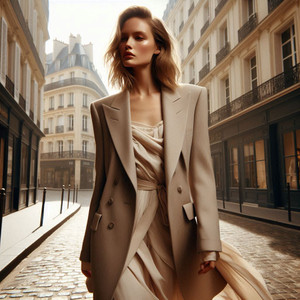

✦ Surreal Lens - All visuals are artistic interpretations created by TLC Paris and are not the original works of the featured creative.
Carlijn Jacobs – Surreal Fashion Photography & Contemporary Visual Storytelling in Paris
Contemporary Fashion Photography, Surreal Editorials & Visual Storytelling
Carlijn Jacobs – Artistic Fashion Photography Between Reality & Abstraction
Carlijn Jacobs creates imaginative visual worlds where fashion, beauty and contemporary art intersect. Her photographs combine theatrical styling, surreal gestures and sculptural portraiture, resulting in imagery that feels simultaneously dreamlike, playful and highly polished.
Explore the Carlijn Jacobs Universe
Fashion Photography ·
Surreal Photography ·
Contemporary Portraiture ·
Creative Direction ·
Editorial Photography ·
Luxury Campaigns ·
Beauty Photography ·
Visual Storytelling ·
Camille Vivier ·
Théo de Gueltzl ·
MEP Paris ·
Palais de Tokyo ·
Palais Galliera ·
Paris Fashion Week ·
Avant-Garde Fashion ·
Art Photography ·
Fashion Exhibitions ·
Creative Women ·
Paris Photography ·
Magazine Editorials ·
Visual Arts ·
Contemporary Artists
TLC Paris Concierge note: Carlijn Jacobs' work feels strongest when explored alongside Paris institutions dedicated to contemporary photography and fashion culture. Pair her universe with MEP, Palais Galliera, Palais de Tokyo and nearby cafés for a slower artistic itinerary.
✦ Explore →
✦ Explore →
Highlights
Surreal Fashion Language
Jacobs creates images where fashion slips into fantasy, wit and visual distortion.
Major Editorial Presence
Published across leading fashion titles with a signature that is instantly recognisable.
Luxury House Collaborations
Works with brands including Chanel, Gucci, Louis Vuitton and Loewe.
Photography as Art Form
Her universe expands beyond editorials into direction, books and visually constructed worlds.
Carlijn Jacobs brings together fashion, artifice and imagination in a way that feels both luxurious and subversive.
✦ Explore →

✦ Surreal Lens - All visuals are artistic interpretations created by TLC Paris and are not the original works of the featured creative.
About Carlijn Jacobs
Dutch photographer and director known for transforming fashion imagery into surreal, intelligent and visually layered worlds.
Editorial Work
Her work has appeared in publications including Vogue, Vogue France, Vogue Italia, Dazed, Pop, M Le Monde and AnOther Magazine.
Visual Style
Jacobs draws on Surrealism, Art Deco and camp, building images that feel theatrical, glossy, strange and meticulously composed.
Notable Collaborations
Chanel, Gucci, Louis Vuitton, Versace, Loewe and Mugler.
Books & Projects
Her first monograph, Mannequins, was published in 2021, extending her practice beyond magazine pages into collectible visual work.
TLC Paris Insight
Carlijn Jacobs stands out for making fashion feel both highly polished and slightly uncanny — a space where beauty, irony and art meet.
✦ Explore →
Fashion Photography, Contemporary Art & Visual Experimentation
Carlijn Jacobs at La MEP
Carlijn Jacobs explores the boundaries between fashion photography, surreal imagery and contemporary visual storytelling. Her work blends portraiture, unexpected compositions and dreamlike narratives, creating photographs that feel both playful and unsettling while challenging conventional beauty standards.
Best For
Fashion photography & contemporary art
Fashion photography & contemporary art
Atmosphere
Experimental, surreal & imaginative
Experimental, surreal & imaginative
What To Expect
Portraits, visual narratives & conceptual imagery
Portraits, visual narratives & conceptual imagery
First Visit?
Yes, for lovers of contemporary image-making
Yes, for lovers of contemporary image-making
Location
La MEP, Le Marais, 4th arrondissement
La MEP, Le Marais, 4th arrondissement
Nearby
Saint-Paul, Seine & Place des Vosges
Saint-Paul, Seine & Place des Vosges
Visit Time
45 minutes–1.5 hours
45 minutes–1.5 hours
Best Time
Weekdays or quiet afternoons
Weekdays or quiet afternoons
Visitor Highlights
La MEP · Carlijn Jacobs · Fashion Photography · Contemporary Photography · Surreal Imagery · Visual Storytelling · Portrait Photography · Le Marais · Place des Vosges · Paris Exhibitions
TLC Paris Concierge note: Carlijn Jacobs' work appeals particularly to visitors interested in the overlap between fashion, art and experimental image-making. Combined with Camille Vivier, Théo de Gueltzl and other La MEP exhibitions, it offers a broader perspective on contemporary photography in Paris.
Working at the intersection of fashion, art, and visual experimentation, Carlijn Jacobs has become one of the most distinctive voices in contemporary photography. Based in Paris, her work reflects the city’s creative energy—moving between the structured elegance of Le Marais, the galleries of Rue de Turenne, and the evolving cultural scene around Palais de Tokyo.
Her visual language is immediately recognizable. Faces are transformed, proportions distorted, and textures pushed beyond realism—yet always with a refined sense of control. Through collaborations with leading publications such as Vogue and i-D Magazine, as well as work connected to major fashion houses including Chanel, Prada, and Balenciaga, Jacobs has established a presence that extends far beyond traditional editorial photography.
Her work naturally connects with Paris’ fashion ecosystem. From moments around Place Vendôme to creative direction influenced by the world of Avenue Montaigne, her imagery reflects a space where fashion is not simply worn, but reinterpreted. There is a constant dialogue between body, material, and structure—an approach that resonates in a city where visual identity defines culture.
Unlike traditional portrait photography, Carlijn Jacobs’ approach is less about capturing a subject and more about constructing an image. Skin becomes surface, clothing becomes form, and the final result exists somewhere between photography and sculpture.
For those exploring Paris through an artistic lens, her work aligns with institutions such as Fondation Louis Vuitton and exhibitions at Centre Pompidou, where boundaries between disciplines continue to dissolve.
Carlijn Jacobs represents a new generation of image-makers—one that is not defined by realism, but by interpretation.