


Jardin du Luxembourg – Elegant Parisian Garden in the 6th Arrondissement
Historic Garden • Médicis Fountain • Luxembourg Palace • Art • Paris 6th
Jardin du Luxembourg – Elegant Parisian Garden in the 6th Arrondissement
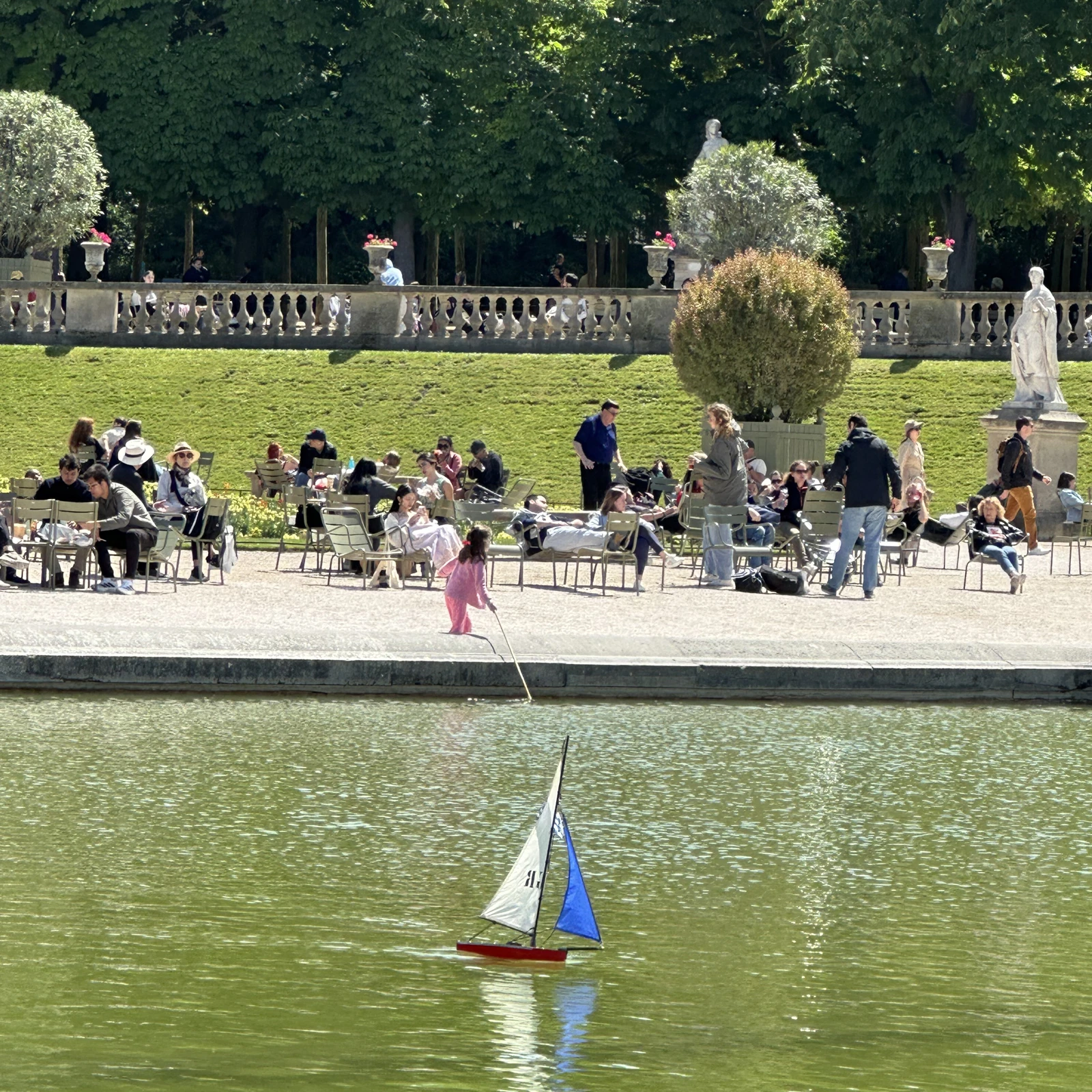
Few places capture the everyday elegance of Paris quite like the Jardin du Luxembourg. Created for Marie de Médicis in the 17th century and today surrounding the Palais du Luxembourg, home of the French Senate, the garden combines formal French geometry with more relaxed English-style landscapes, tree-lined promenades, flowerbeds and one of Paris’s most recognisable collections of green garden chairs. Find a chair beside the Grand Bassin, watch children sail traditional wooden boats, walk beneath chestnut trees, discover the romantic Médicis Fountain, or follow the paths through an extraordinary open-air collection of 102 statues. Beyond the postcard views are an orchard, historic Orangery, apiary, bandstand, sports areas, playgrounds and changing cultural exhibitions, while the Musée du Luxembourg beside the garden adds another layer of art and history. Entrance to the garden itself is free, making this as much a place to experience Parisian daily life as a landmark to visit.
Explore Jardin du Luxembourg & the Paris Left Bank
Jardin du Luxembourg •
Jardin du Luxembourg Paris •
Luxembourg Gardens Paris •
Luxembourg Garden Paris •
Paris gardens •
Best gardens Paris •
Beautiful gardens Paris •
Historic gardens Paris •
Elegant gardens Paris •
Famous parks Paris •
Jardin du Luxembourg Paris 6 •
Paris 6th arrondissement •
Gardens Paris 6 •
Things to do Paris 6 •
Things to see Paris 6 •
Left Bank gardens •
Rive Gauche gardens •
Saint-Germain gardens •
Latin Quarter gardens •
Palais du Luxembourg •
Luxembourg Palace Paris •
French Senate Paris •
Sénat Paris •
French Senate garden •
Marie de Médicis Paris •
Marie de Medici garden •
17th century Paris garden •
Historic Paris heritage •
Médicis Fountain •
Fontaine Médicis •
Medici Fountain Paris •
Famous fountains Paris •
Romantic places Paris •
Romantic gardens Paris •
Historic fountains Paris •
Photography spots Paris •
Beautiful places Paris •
Grand Bassin Luxembourg •
Luxembourg Garden pond •
Sailboats Jardin du Luxembourg •
Wooden sailboats Paris •
Toy boats Paris •
Children’s sailboats Paris •
Paris with children •
Family activities Paris •
Things to do with kids Paris •
Luxembourg green chairs •
Paris green chairs •
Sénat chairs •
Iconic Paris chairs •
Paris chair culture •
Sitting in Paris gardens •
Parisian garden culture •
Parisian daily life •
Paris people watching •
Luxembourg Garden statues •
Jardin du Luxembourg statues •
Open-air museum Paris •
Outdoor sculpture Paris •
Sculpture gardens Paris •
102 statues Luxembourg Garden •
Queens of France statues •
Femmes Illustres statues •
French queens statues •
Baudelaire statue Paris •
George Sand statue Paris •
Stendhal statue Paris •
Flaubert statue Paris •
Chopin statue Paris •
Delacroix statue Paris •
Literary Paris •
Writers in Paris •
Art in Paris gardens •
Luxembourg Garden flowers •
Paris flower gardens •
Seasonal flowers Paris •
Spring gardens Paris •
Summer gardens Paris •
Autumn gardens Paris •
French formal gardens •
English gardens Paris •
Tree-lined walks Paris •
Luxembourg Garden orchard •
Paris orchard •
Apple orchard Paris •
Pear orchard Paris •
Historic orchard Paris •
Luxembourg apiary •
Paris beekeeping •
Bees in Paris •
School apiary Paris •
Botanical heritage Paris •
Orangerie du Luxembourg •
Luxembourg Orangery •
Historic Orangery Paris •
Orange trees Paris •
Bitter orange trees •
Garden heritage Paris •
Davioud Pavilion •
Médicis Aqueduct •
Historic Paris gardens •
Musée du Luxembourg •
Luxembourg Museum Paris •
Museums Paris 6 •
Art exhibitions Paris •
Exhibition venues Paris •
Art near Jardin du Luxembourg •
Museum near Luxembourg Garden •
Paris art exhibitions •
Luxembourg Garden concerts •
Paris garden concerts •
Music bandstand Paris •
Kiosque à musique Paris •
Outdoor concerts Paris •
Free cultural events Paris •
Luxembourg Garden exhibitions •
Outdoor exhibitions Paris •
Art on garden railings •
Luxembourg Garden playground •
Paris playgrounds •
Carousel Paris •
Puppet theatre Paris •
Marionette theatre Paris •
Pony rides Paris •
Family gardens Paris •
Children’s activities Paris •
Paris family itinerary •
Chess Jardin du Luxembourg •
Paris outdoor chess •
Tennis Jardin du Luxembourg •
Boules Paris •
Sports Jardin du Luxembourg •
Running Paris gardens •
Paris outdoor activities •
Garden activities Paris •
Free things to do Paris •
Free gardens Paris •
Free attractions Paris •
Free things Paris 6 •
Paris on a budget •
Jardin du Luxembourg free entry •
Free Paris itinerary •
Paris walking itinerary •
RER Luxembourg Paris •
Luxembourg station Paris •
Odéon Paris •
Saint-Germain-des-Prés •
Rue de Vaugirard •
Boulevard Saint-Michel •
Things to do near Odéon •
Things to do near Saint-Germain-des-Prés •
Paris morning walk •
Paris afternoon walk •
Paris garden walk •
Romantic walk Paris •
Left Bank walk Paris •
Paris picnic gardens •
People watching Paris •
Reading in Paris •
Quiet places Paris •
Relaxing places Paris •
Jardin du Luxembourg photography •
Paris garden photography •
Paris golden hour •
Paris spring photography •
Paris autumn photography •
Iconic Paris views •
Paris travel photography •
Paris Instagram locations •
TLC Paris Jardin du Luxembourg •
TLC Paris Luxembourg Gardens •
TLC Paris gardens •
TLC Paris Paris 6 •
TLC Paris Left Bank •
TLC Paris Saint-Germain •
TLC Paris family activities •
TLC Paris free things to do
TLC Paris tip: Don’t rush through Luxembourg simply to photograph the palace. Pick up one of the famous green Sénat chairs and spend a little time around the Grand Bassin — watching the boats, reading or simply people-watching is part of the experience. Then walk towards the shaded Médicis Fountain and through the sculpture-lined paths. If you want to add culture, check the current programme at the Musée du Luxembourg and the garden’s temporary exhibitions and concerts. Opening and closing times change throughout the year according to the season, so check the official schedule before an early-morning or evening visit.
Highlights (evergreen)
Iconic Paris Garden
One of Paris’s most emblematic gardens — symmetry, statues, and lived-in calm.
Palace & Senate Setting
Anchored by the Palais du Luxembourg, seat of the French Senate.
Culture & Exhibitions
Gardens, museum, and cultural programming blend art with open air.
Everyday Paris Life
Reading, walking, pausing — a garden that belongs to locals as much as visitors.
Practical Information
History & Heritage
Cultural Programme
For Families
Musée du Luxembourg
Museum on Instagram
TLC Paris Concierge note: Jardin du Luxembourg is not just a garden — it’s a living cultural space where history, art, and daily Parisian rhythm meet.
✦ Explore →
✦ Explore →
Historic Paris Garden, Luxembourg Palace, Medici Fountain, Sculptures, Family Activities & Left Bank Walks
Jardin du Luxembourg – Elegant Parisian Garden in the 6th Arrondissement
Created from 1612 at the request of Marie de’ Medici around the Luxembourg Palace, the Jardin du Luxembourg is one of the Left Bank’s great places to slow down. Formal French gardens meet tree-lined promenades, lawns, orchards, fountains and sculptures, while Parisians come to read, exercise, play chess or simply claim one of the famous green chairs. Its position between Saint-Germain-des-Prés and the Latin Quarter makes it particularly easy to build into a day of exploring Paris on foot.
Best For
Garden walks, families, couples, photography, architecture, picnics, reading & a peaceful pause while exploring the Left Bank
Garden walks, families, couples, photography, architecture, picnics, reading & a peaceful pause while exploring the Left Bank
Don’t Miss
The Medici Fountain, central Grand Bassin, Luxembourg Palace, tree-lined terraces, flowerbeds & the garden’s remarkable collection of sculptures
The Medici Fountain, central Grand Bassin, Luxembourg Palace, tree-lined terraces, flowerbeds & the garden’s remarkable collection of sculptures
For Children
Model sailboats on the Grand Bassin, playground activities, traditional puppet theatre and plenty of space for a family afternoon outdoors
Model sailboats on the Grand Bassin, playground activities, traditional puppet theatre and plenty of space for a family afternoon outdoors
Like A Parisian
Take a green chair, read beside the fountain, watch chess or pétanque, stroll beneath the trees or simply stop and enjoy the rhythm of the garden
Take a green chair, read beside the fountain, watch chess or pétanque, stroll beneath the trees or simply stop and enjoy the rhythm of the garden
Art & Sculpture
More than a hundred sculptures are distributed through the garden, alongside temporary outdoor exhibitions and the nearby Musée du Luxembourg
More than a hundred sculptures are distributed through the garden, alongside temporary outdoor exhibitions and the nearby Musée du Luxembourg
Orchard & Nature
Discover historic fruit collections, an apiary, seasonal planting and changing displays that make the garden worth revisiting throughout the year
Discover historic fruit collections, an apiary, seasonal planting and changing displays that make the garden worth revisiting throughout the year
Nearby
Saint-Sulpice, Saint-Germain-des-Prés, Panthéon, Sorbonne, Odéon, Latin Quarter & Musée du Luxembourg
Saint-Sulpice, Saint-Germain-des-Prés, Panthéon, Sorbonne, Odéon, Latin Quarter & Musée du Luxembourg
Good To Know
Entry to the garden is free. Opening and closing times change throughout the year according to the season, so check the day’s schedule before visiting
Entry to the garden is free. Opening and closing times change throughout the year according to the season, so check the day’s schedule before visiting
Visitor Highlights
Jardin du Luxembourg · Luxembourg Gardens · Luxembourg Garden Paris · Jardin du Luxembourg Paris · Paris Gardens · Best Gardens Paris · Historic Gardens Paris · Free Gardens Paris · Public Gardens Paris · Romantic Gardens Paris · Beautiful Gardens Paris · French Gardens · Left Bank Gardens · Rive Gauche · Paris 6th Arrondissement · 6th Arrondissement Paris · Luxembourg Palace · Palais du Luxembourg · French Senate · Sénat · Marie de’ Medici · Medici Fountain · Fontaine Médicis · Grand Bassin · Paris Fountains · Paris Sculptures · Sculpture Garden Paris · Statues Paris · Queens of France Statues · Statue of Liberty Paris · Musée du Luxembourg · Luxembourg Museum · Art Exhibitions Paris · Paris Museum Guide · Model Sailboats Paris · Toy Boats Luxembourg Gardens · Children Paris · Things To Do With Kids Paris · Family Activities Paris · Family Friendly Paris · Paris Playground · Puppet Theatre Paris · Marionettes Paris · Chess Paris · Pétanque Paris · Tennis Paris · Paris Picnic · Picnic Spots Paris · Paris Walking · Walking Paris · Paris Photography · Photo Spots Paris · Romantic Paris · Paris Couples · Paris With Children · Paris With Kids · Orchard Paris · Apple Orchard · Pear Orchard · Apiary Paris · Beekeeping Paris · Historic Trees Paris · Seasonal Flowers · Autumn Paris · Spring in Paris · Summer in Paris · Saint-Germain-des-Prés · Saint-Germain Paris · Saint-Sulpice · Place Saint-Sulpice · Odéon · Latin Quarter · Quartier Latin · Panthéon · Sorbonne · Rue de Vaugirard · Boulevard Saint-Michel · Left Bank Walk · Saint-Germain Walk · Latin Quarter Walk · Things To Do 6th Arrondissement · What To See Near Luxembourg Gardens · Paris Garden Guide · Paris Family Guide · Paris Walking Guide · TLC Paris
TLC Paris Concierge note: Don’t rush through Luxembourg Gardens simply on the way to somewhere else. Walk beyond the central basin to find the Medici Fountain, sculptures, orchards and quieter tree-lined corners, then take one of the green chairs and stop for a while. With children, the model sailboats and garden activities can easily turn the visit into an afternoon; without children, continue towards Saint-Sulpice and Saint-Germain-des-Prés or walk in the opposite direction towards the Panthéon and Latin Quarter.
Located in the heart of the 6th arrondissement, the Jardin du Luxembourg is more than just a park—it’s a living, breathing symbol of Parisian elegance, history, and leisure. Often referred to as “the quintessential Parisian garden,” this lush oasis blends formal French landscaping with natural English-inspired sections, offering locals and visitors alike an escape into tranquility and culture in the middle of a bustling city.
Enclosed by iron gates and surrounded by beautiful Haussmann-era buildings, this garden is a favorite among poets, artists, lovers, and families. Designed in 1612 by Marie de’ Medici, widow of King Henry IV of France, it was modeled after the Boboli Gardens in Florence. The influence of Italian Renaissance design is still visible today in the park’s layout and symmetry.
But what makes the Jardin du Luxembourg uniquely Parisian is its evolution into a place where regal formality meets daily Parisian life. Statues of French queens stand peacefully beside students sketching, readers lounging, and children floating model sailboats in the central basin.
Nearby, the Rue Madame mirrors this understated charm with its soft façades, elegant quietude, and literary rhythm—an ideal post-garden promenade for those who appreciate calm sophistication.
After exploring the tree-lined alleys, the Medici Fountain, and the majestic Luxembourg Palace, make time for a cultural stop at the Odéon Theatre Paris, just a few minutes away. Its neoclassical architecture and rich dramatic history are a perfect pairing to the garden’s grandeur.
For a more intimate artistic experience, wander toward Rue Férou, a poetic passage tucked nearby, known for its engraved verses and painterly calm. It's one of Paris's most romantic hidden spots, often overlooked but deeply evocative.
Just beyond the garden’s northern edge lies the Musée du Luxembourg, housed in the former Orangerie of the palace. Frequently featuring exhibitions by major European artists, it offers a cultural continuation of your stroll through art, nature, and memory.
And if you’re looking to enhance your day with Parisian shopping or lifestyle inspiration, Maison Sarah Lavoine, not far from the garden, offers interior treasures that reflect the same quiet luxury and thoughtful design embodied by the Jardin du Luxembourg itself.


