


Hermès Faubourg Saint-Honoré – The Soul of Parisian Craftsmanship
Paris Flagship • Leather Craftsmanship • Silk • Fashion • Hermès Heritage
Hermès Faubourg Saint-Honoré – The Soul of Parisian Craftsmanship
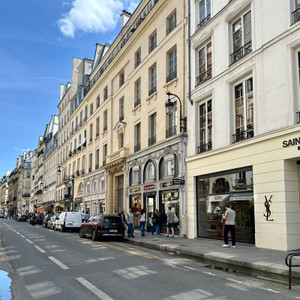
At 24 Rue du Faubourg Saint-Honoré, Hermès occupies one of the most emblematic addresses in Paris luxury. More than a boutique, the historic Faubourg Saint-Honoré house brings together the many worlds of Hermès: leather goods, women’s and men’s fashion, silk, shoes, jewellery, watches, fragrance, beauty, equestrian heritage and objects for the home. It is the Paris address most closely associated with the Maison’s identity — a place where craftsmanship, utility, proportion and discreet elegance remain at the centre of the experience.
Explore Hermès Faubourg Saint-Honoré
Hermès Paris • Hermès Faubourg Saint-Honoré • 24 Rue du Faubourg Saint-Honoré • Hermès flagship Paris • historic Hermès boutique • Paris luxury shopping • French craftsmanship • Parisian craftsmanship • Hermès leather craftsmanship • Hermès leather goods • Hermès bags • Hermès handbags • Kelly bag • Birkin bag • Constance bag • Picotin bag • Hermès small leather goods • Hermès silk • carré scarves • silk twillies • Hermès ties • Hermès women’s fashion • Hermès men’s fashion • Hermès ready-to-wear • Hermès shoes • Hermès jewellery • Hermès watches • Hermès fragrance • Hermès beauty • Hermès home • Hermès equestrian heritage • saddlery craftsmanship • leather artisans • hand stitching • fine leather • French luxury house • heritage luxury • quiet luxury • timeless design • Paris fashion heritage • Rue du Faubourg Saint-Honoré shopping • 8th arrondissement shopping • luxury boutiques Paris • Madeleine shopping • Place de la Madeleine • Rue Saint-Honoré • Golden Triangle Paris • Hermès Paris shopping guide • Hermès boutique experience • Hermès craftsmanship Paris • Hermès gift shopping • Hermès accessories • Hermès scarf Paris • Hermès belt Paris • Hermès shoes Paris • Hermès watch Paris • Hermès jewellery Paris • Hermès fragrance Paris • luxury shopping itinerary Paris • iconic Paris fashion address • TLC Paris Hermès guide • TLC Paris luxury shopping
TLC Paris tip: If you are visiting Hermès for the first time, Faubourg Saint-Honoré is the address to choose for the history and atmosphere as much as for the shopping. Rather than concentrating only on the most famous bags, take time to look across leather, silk, shoes, jewellery and objects — the character of Hermès becomes much clearer when you see how the same ideas of material, function and craftsmanship move from one métier to another.
Highlights – Hermès Faubourg Saint-Honoré
The Historic Paris House
24 Rue du Faubourg Saint-Honoré is the emblematic Hermès address in Paris, inseparable from the history and identity of the Maison.
Leather & Saddlery Heritage
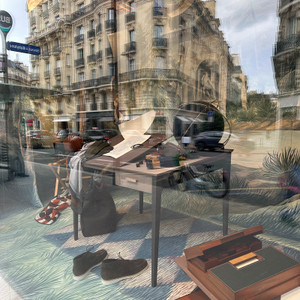
Hermès began as a harness and saddlery workshop, and its devotion to leather, function and exacting craftsmanship remains fundamental to the House.
The Hermès Métiers
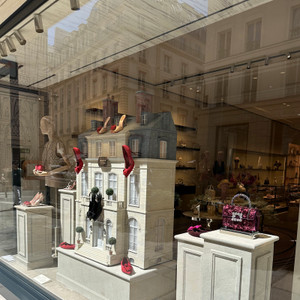
Leather goods, silk, fashion, shoes, jewellery, watches, fragrance and objects reveal the remarkable breadth of Hermès craftsmanship under one historic name.
A Paris Destination
Beyond shopping, Faubourg Saint-Honoré offers a sense of Hermès in its home city — heritage, craft and Parisian discretion at an address known around the world.
Faubourg Saint-Honoré & Map
Hermès Faubourg Saint-Honoré
24 Rue du Faubourg Saint-Honoré, 75008 Paris
This historic address is the natural starting point for understanding Hermès in Paris, bringing the Maison’s heritage and many different métiers together in the Faubourg Saint-Honoré luxury district.
Faubourg Saint-Honoré
24 Rue du Faubourg Saint-Honoré
75008 Paris
George V
42 Avenue George V
75008 Paris
Sèvres
17 Rue de Sèvres
75006 Paris
Paris House
Leather • Silk • Fashion
Accessories • Objects
From Saddlery to a Paris Icon
Hermès was founded in Paris in 1837 by Thierry Hermès, originally creating harnesses and equipment for horses and carriages. The Maison later established itself at 24 Rue du Faubourg Saint-Honoré.
That equestrian origin remains visible in the House’s emphasis on utility, durability, leather expertise and objects designed to be both beautiful and functional.
Leather Goods & Exceptional Craft
Leather remains one of the defining Hermès métiers, encompassing handbags, travel pieces, small leather goods and objects shaped by specialised craftsmanship.
The fascination lies not only in famous designs, but also in leather selection, stitching, construction, hardware and the precision with which an object is made to function and age.
Silk, Fashion & Accessories
Hermès extends far beyond leather. Silk carrés, scarves and ties sit alongside women’s and men’s ready-to-wear, shoes, belts, jewellery and other accessories.
Moving between these different categories reveals how recurring ideas of colour, material, drawing and craftsmanship connect the wider Hermès universe.
Watches, Jewellery, Beauty & Home
Watches and jewellery introduce another expression of Hermès craftsmanship, while fragrance and beauty explore the House through scent, colour and sensory detail.
The home universe extends the same approach to tableware, textiles, decorative objects and pieces for everyday living, demonstrating how broadly Hermès interprets the idea of an object made with care.
Craftsmanship, Care & Longevity
Longevity is an important part of the Hermès philosophy. Many objects are designed to be used for years and, where appropriate, maintained or repaired rather than simply replaced.
For questions concerning the care, maintenance or repair of an Hermès piece, consult the Maison directly so the object and its materials can be assessed appropriately.
Planning Your Faubourg Visit
Faubourg Saint-Honoré is worth visiting even when your interest extends beyond one particular product. Looking across several métiers gives a much clearer understanding of Hermès craftsmanship than focusing on a single famous item.
Availability, services and opening information can change, so check the official Hermès store finder before making a special journey. The boutique also sits naturally within a walk through Madeleine, Faubourg Saint-Honoré and the surrounding historic luxury district.
TLC Paris tip: Treat Faubourg Saint-Honoré as more than a stop for a particular Hermès piece. Look across leather, silk, fashion, jewellery and objects to see how the same attention to material, function and detail moves through the different métiers. Afterwards, continue along Faubourg Saint-Honoré and towards Madeleine for one of central Paris’s classic luxury walks.
Historic Paris Maison, Leather Goods, Silk, Fashion, Shoes, Jewellery, Watches & Equestrian Heritage
Hermès Faubourg Saint-Honoré – The Soul of Parisian Craftsmanship
Hermès has occupied 24 Rue du Faubourg Saint-Honoré since 1880, when Charles-Émile Hermès moved the family workshops here and opened a store for bespoke harnesses and saddles. Today, this emblematic Paris address connects the Maison’s equestrian origins with leather goods, silk, women’s and men’s fashion, shoes, jewellery, watches, accessories and contemporary craftsmanship.
Best For
Hermès heritage, French craftsmanship, leather goods, silk, fashion, gifts & an iconic Paris address
Hermès heritage, French craftsmanship, leather goods, silk, fashion, gifts & an iconic Paris address
Leather Goods
Handbags, travel pieces, wallets, small leather goods & celebrated Hermès leather craftsmanship
Handbags, travel pieces, wallets, small leather goods & celebrated Hermès leather craftsmanship
Silk & Accessories
Carrés, twillies, scarves, belts, hats, gloves & changing collections of distinctive Hermès accessories
Carrés, twillies, scarves, belts, hats, gloves & changing collections of distinctive Hermès accessories
Women & Men
Ready-to-wear, shoes and accessories alongside the wider Hermès lifestyle and craftsmanship universe
Ready-to-wear, shoes and accessories alongside the wider Hermès lifestyle and craftsmanship universe
Heritage
Founded by Thierry Hermès in Paris in 1837; the Maison moved to its emblematic No. 24 address in 1880
Founded by Thierry Hermès in Paris in 1837; the Maison moved to its emblematic No. 24 address in 1880
Equestrian Roots
Harness-making and saddlery shaped the House’s enduring focus on materials, function, stitching & craftsmanship
Harness-making and saddlery shaped the House’s enduring focus on materials, function, stitching & craftsmanship
Beyond Bags
Jewellery, watches, fragrance, fashion, footwear, silk, accessories & objects offer many ways to discover Hermès
Jewellery, watches, fragrance, fashion, footwear, silk, accessories & objects offer many ways to discover Hermès
Paris Address
24 Rue du Faubourg Saint-Honoré, 75008 Paris, close to the Élysée Palace, Madeleine & Place de la Concorde
24 Rue du Faubourg Saint-Honoré, 75008 Paris, close to the Élysée Palace, Madeleine & Place de la Concorde
Visitor Highlights
Hermès · Hermès Paris · Hermès Faubourg Saint-Honoré · Hermès 24 Faubourg · 24 Rue du Faubourg Saint-Honoré · Thierry Hermès · Charles-Émile Hermès · Hermès History · Hermès Heritage · French Craftsmanship · Paris Craftsmanship · Savoir-Faire · Equestrian Heritage · Saddlery · Saddle Stitching · Hermès Leather · Hermès Leather Goods · Hermès Bags · Luxury Handbags · Birkin · Birkin Bag · Kelly · Kelly Bag · Hermès Wallets · Small Leather Goods · Travel Bags · Hermès Silk · Hermès Scarves · Hermès Carré · Silk Scarves · Twillies · Hermès Women · Hermès Men · Women’s Fashion · Men’s Fashion · Luxury Ready-to-Wear · Hermès Shoes · Women’s Shoes · Men’s Shoes · Hermès Belts · Hermès Jewellery · Fine Jewellery · Fashion Jewellery · Hermès Watches · Luxury Watches · Hermès Fragrance · Luxury Gifts · Gifts for Her · Gifts for Him · Paris Luxury Shopping · Rue du Faubourg Saint-Honoré · Paris 8th Arrondissement · Élysée Palace · Place Beauvau · Madeleine · Place de la Concorde · Luxury Shopping Paris · Paris Fashion Guide · TLC Paris
TLC Paris Concierge note: Do not make a first visit to 24 Faubourg only about finding one famous bag. Explore the leather, silk, fashion, shoes, jewellery, watches and equestrian references as well. The connections between these different métiers reveal much more about why craftsmanship has remained central to Hermès since 1837.
Hermès Faubourg Saint-Honoré – The Soul of Parisian Craftsmanship
At 24 Rue du Faubourg Saint-Honoré, visitors encounter one of the most important addresses in the history of Hermès. The House itself began earlier, in 1837, when Thierry Hermès established a harness-making workshop in Paris. In 1880, his son Charles-Émile Hermès moved the workshops to No. 24 and opened a store where clients could order bespoke harnesses and saddles.
That equestrian beginning still matters. Saddlery, leather craftsmanship and the relationship between beauty and practical use became foundations from which Hermès gradually developed into a much wider Maison. Today, 24 Faubourg Saint-Honoré remains an emblematic Paris address and a particularly meaningful place to discover the different métiers of Hermès.
From Saddles & Harnesses to a Complete Maison
Hermès did not begin as a conventional fashion house. Thierry Hermès was a harness-maker, creating equipment for horses and carriages at a time when durability, lightness and precision were practical necessities rather than decorative ideas.
As modes of transport and everyday life changed, Hermès adapted. Saddlery and harness-making expanded into luggage and leather goods, while the Maison gradually developed clothing, silk, jewellery, watches and other objects.
This history helps explain why craftsmanship remains so central to Hermès. The value of an object is not intended to come from a logo alone, but from the relationship between material, construction, function and the hand of the artisan.
Hermès Bags & Leather Goods
Leather goods are among the most recognised expressions of the Maison today. Hermès has created numerous bag families over generations, including the celebrated Kelly and Birkin, alongside other handbags, travel pieces and small leather goods.
For visitors interested in Hermès leather, it is worth looking beyond the name of a particular bag. Different leathers have different textures, structures and ways of ageing, while handles, closures, stitching and internal construction reveal much of the technical work behind an object.
Specific models, colours, sizes and leathers should never be assumed to be available during a visit. Hermès collections and boutique availability change, making flexibility useful if you are exploring leather goods in Paris.
Hermès Silk & the Carré
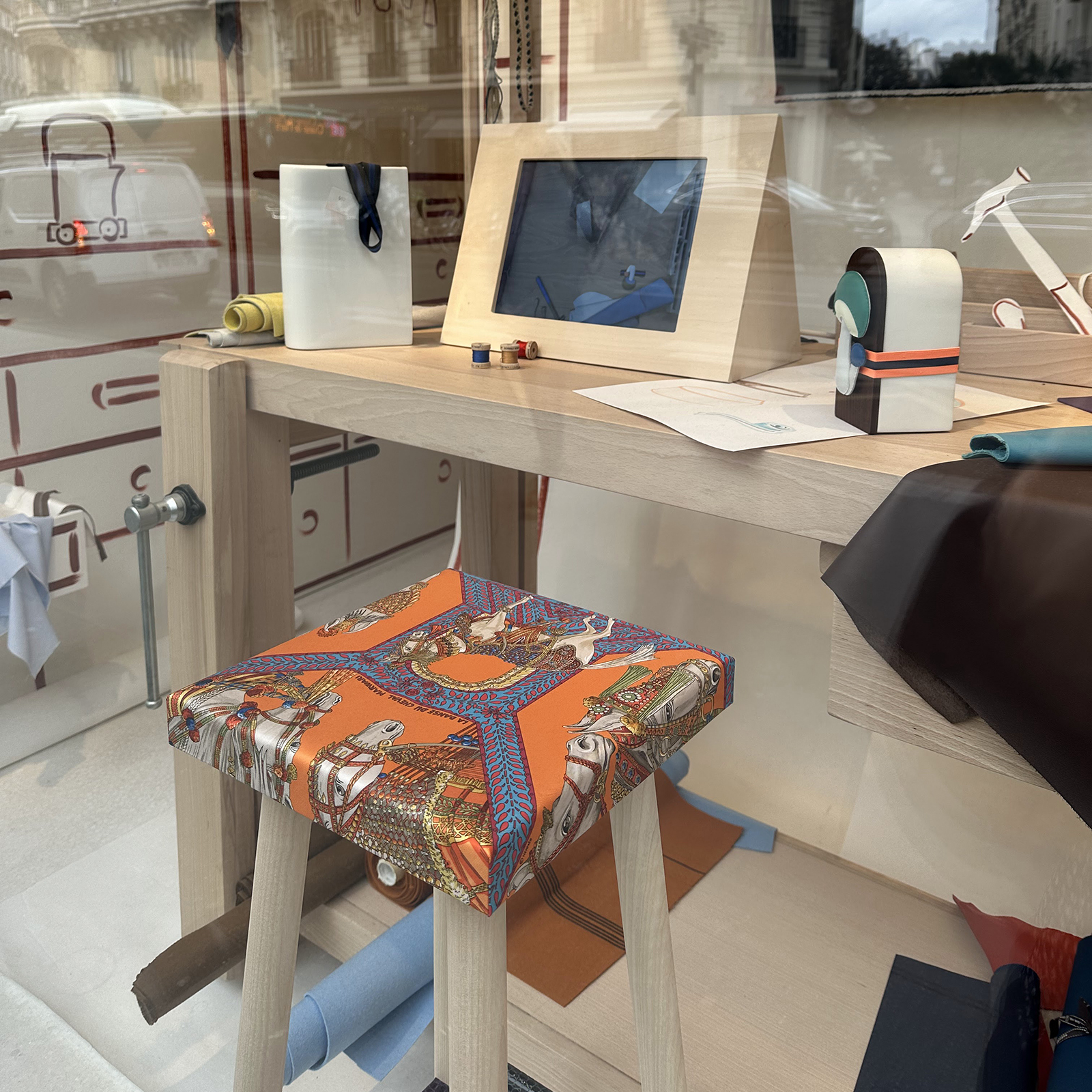
The first Hermès silk scarf was introduced in 1937, a century after the founding of the House. The carré has since become another important Hermès signature, combining illustration, colour and textile craftsmanship within its distinctive square format.
Silk offers a very different introduction to Hermès from leather goods. Scarves, twillies and other silk pieces allow visitors to explore changing designs, colours and artistic collaborations, while the way a scarf is folded or tied can completely alter its appearance.
Fashion for Women & Men
Hermès today extends across complete wardrobes for women and men. Ready-to-wear, coats, jackets, knitwear, trousers, dresses, shirts and seasonal pieces translate the House’s interest in materials and construction into clothing.
Footwear and accessories expand the wardrobe further through shoes, belts, hats, gloves and other pieces. Some designs carry immediately recognisable Hermès codes, while others are considerably more discreet.
Jewellery, Watches & Accessories
The Hermès universe also encompasses fine jewellery, fashion jewellery, watches and accessories. Equestrian references frequently reappear in these collections through chains, buckles, links and other forms derived from the House’s history.
For visitors looking for an important gift rather than a handbag, these categories — together with silk, small leather goods, fragrance and accessories — provide many other ways to explore Hermès craftsmanship.
The Equestrian Heritage of Hermès
Despite the international recognition of its fashion and leather goods, the horse remains fundamental to the identity of Hermès. The Maison’s earliest expertise was built around harnesses and saddles, and equestrian culture continues to inform its vocabulary, materials and objects.
Understanding this origin makes many familiar Hermès details easier to read. Saddlery stitching, straps, buckles and harness-inspired forms are not simply decorative references added later; they connect contemporary objects with the technical world from which the House emerged.
Why 24 Faubourg Saint-Honoré Matters
The importance of No. 24 is therefore historical as well as commercial. Hermès has occupied the address since 1880, when Charles-Émile Hermès transferred the workshops there and opened a store for bespoke harnesses and saddles.
Over generations, the address became inseparable from the identity of the Maison. Even the Hermès fragrance 24 Faubourg takes its name from this Paris location, underlining the symbolic importance of the building within the history of the House.
What Is Near Hermès Faubourg Saint-Honoré?
The boutique sits within the 8th arrondissement, in a particularly interesting part of central Paris for walking.
The Élysée Palace and Place Beauvau are close by, while Le Bristol Paris provides a nearby palace-hotel stop for dining or drinks.
Continue west along Rue du Faubourg Saint-Honoré towards Avenue Matignon and the Champs-Élysées, or walk east towards Rue Royale and Place de la Concorde. The Madeleine is also within an easy walk, making this a useful area to combine shopping with architecture, food and a wider exploration of the historic centre.
Is 24 Faubourg Worth Visiting?
For someone interested in Hermès as a Maison rather than one particular product, yes. This is an address where the history of the House and contemporary Hermès meet, making it particularly meaningful for a first visit in Paris.
It is equally worth visiting without a Birkin or Kelly as the sole objective. Leather goods are only one part of Hermès: silk, fashion, shoes, jewellery, watches, fragrance, accessories and equestrian heritage together tell a much richer story of the House.
TLC Paris tip: On a first visit to 24 Faubourg, allow yourself to explore beyond the item you initially came to see. Look closely at the leather, stitching, silk, hardware and construction across different departments. Hermès becomes much more interesting when you see the connections between its equestrian beginnings and the objects it creates today.